
Every three minutes, in American schools, a secret outbreak is discovered one student has been found to be smoking. Health professionals consider teenage vaping a full blown crisis. According to the CDC, over 40% of highschool students and 80% of middle schoolers have tried electronic cigarettes. These devices are almost all nicotine-based (99%). Nicotine is a drug that can be addictive and could alter the brain’s wiring and can be the first step to smoking cigarettes. Educators, parents, and administrators are under increasing pressure to be proactive. Vape detectors are an advanced device that is now a campus must-have. Triton and 3D Sense, among the leading vape detectors in schools have more to offer than sound an alarm.
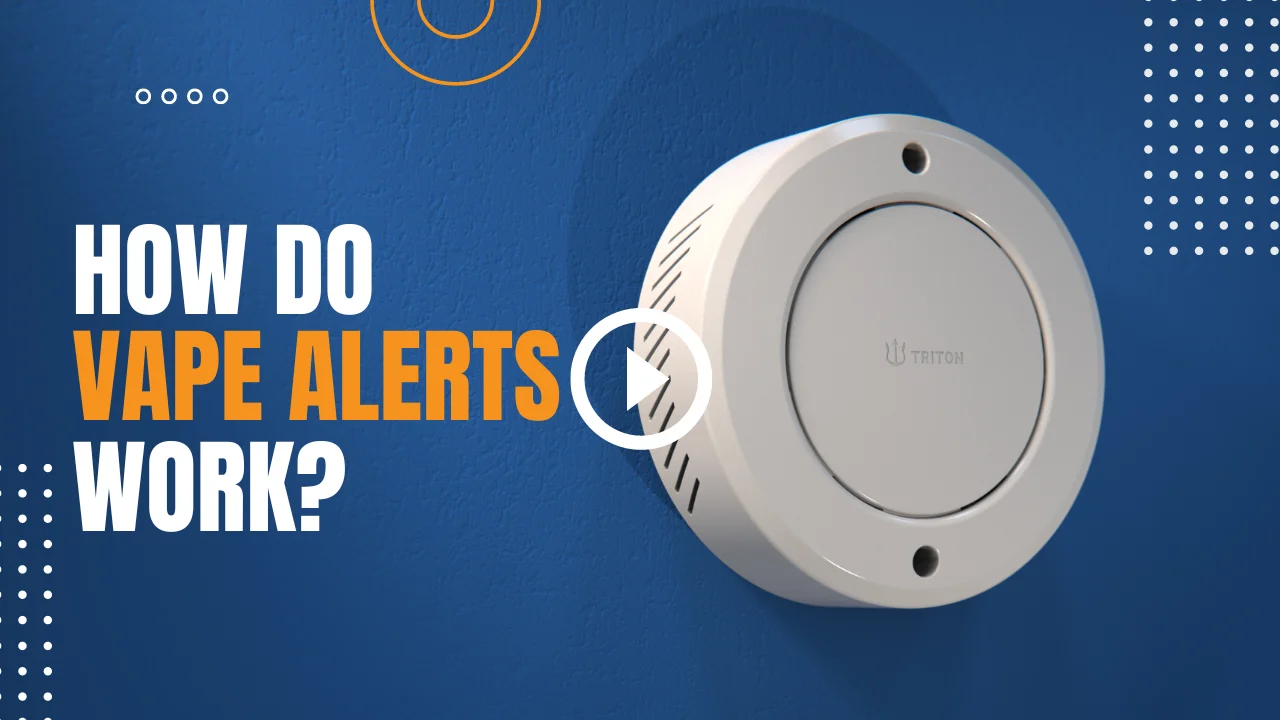
How do Vape Detectors work: Precision without intrusion
A modern vape smoke detector like the Triton ULTRA Smart Safety Sensor doesn’t rely on cameras or audio recordings ensuring 100% privacy compliance while still delivering actionable intelligence. It utilizes particulate sensors that analyze the air in real-time. When vape-related aerosols, cigarettes smoke, marijuana vapor, or even masking agents (like heavy perfumes) occur the device sends immediate alerts by email or text to the appropriate staff. False-positives remain very minimal. Administrators can be assured that all notifications require immediate attention.
The price of installation can be reduced if one device covers the entire room. Within 5 weeks of the installation, Triton customers typically report an impressive decrease in the frequency of vaping. What’s the reason? Data-driven deterrence. Triton Cloud Dashboard offers a “hotspot” of where and when vaping is occurring the most frequently. Principals are able to guide security personnel or hall monitors to the areas they’re needed the most.
Beyond detection, occupancy visibility and Loitering control
Triton is distinct from other vape detectors because of its patent-pending occupancy visualization technology. The ULTRA sensor doesn’t require images or even sounds to track the time of people’s stay and count in areas that are sensitive. Administrators see color-coded heat maps that show when bathrooms become social spaces that are ideal for vaping as well as the long-term close contact that can spread respiratory diseases.
Stanford Medicine’s study highlights the significance of this problem students who smoke are five times more likely of contracting COVID-19. By reducing congregating the vape community, these devices help improve air quality and lower the risk of transmission of all airborne pathogens. After the pandemic this device has become essential due to their dual advantages.
Data can be transformed into discipline and dialog
Numbers can tell a story. Triton Reports module collects quantitative information about the incident’s timestamps. Locations, and frequency trends. The information is then presented to school boards. Parent groups. And even students themselves. If a campus displays 60 percent less detections following the rollout of detectors doubts are lowered. Parents will notice that the students are involved; they are also aware of the consequences.
The educators can increase the effectiveness of their message by announcing that smoke detectors for vapes are available starting from day one. 3D Sense, for example advertises itself as a preventative. The guidance materials recommend that students are aware that air surveillance is constantly on. Peer accountability is the next step: The social impact of triggering an alarm often proves to be far more potent than giving a lecture.
A Multi-Front Strategy Schools Can’t Ignore
Vape detectors aren’t able to stop smoking on their own, however they’re a component of a larger solution.
Alerts in real-time catch incidents in progress.
Education – Evidence-based studies are generating anti-vaping curriculums.
Deterrence – Visible signage and well-known consequences change behavior.
Discipline – Hotspot data justifies targeted enforcement.
Support for Students – Schools use detection devices with support to help students struggling to quit smoking.
The CDC says that to reverse the trend “buy-in is required from parents and educators and society.” Vape detectors are the missing piece giving immediate, objective feedback that can transform good intentions into tangible results.
Deployment Conveniently
Triton Cloud Dashboard makes it simple to sign up your devices. Administrators are able to customize the rules for notification and also add contacts. Plan a demonstration for a chance to see how easy it is to use.
Conclusion
Every puff you don’t take is a risk to an entire lifetime of addiction. Every bathroom activity which is not spotted is the risk of your safety and health. Vape detectors such as 3D Sense and Triton for schools provide more than monitoring. They also deliver intelligence to discouragement, as well as evidence of improvement. The campuses that have them simply respond to the issue of vaping They take back control of the issue.
These tools turn vague fears into concrete victories. With a single sensor in each room and security-grade occupancy information the tools can change vague concerns into concrete victories. In a time when 40% of high school students have already embraced the idea and middle-school enrollment is growing daily, waiting no longer is logical. Be sure to be the first ones to hear what your school’s air is proclaiming.